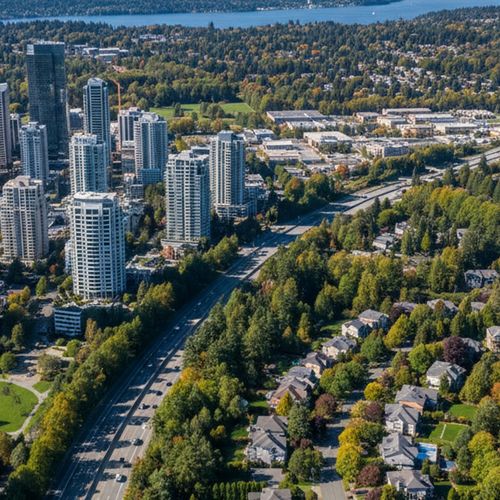

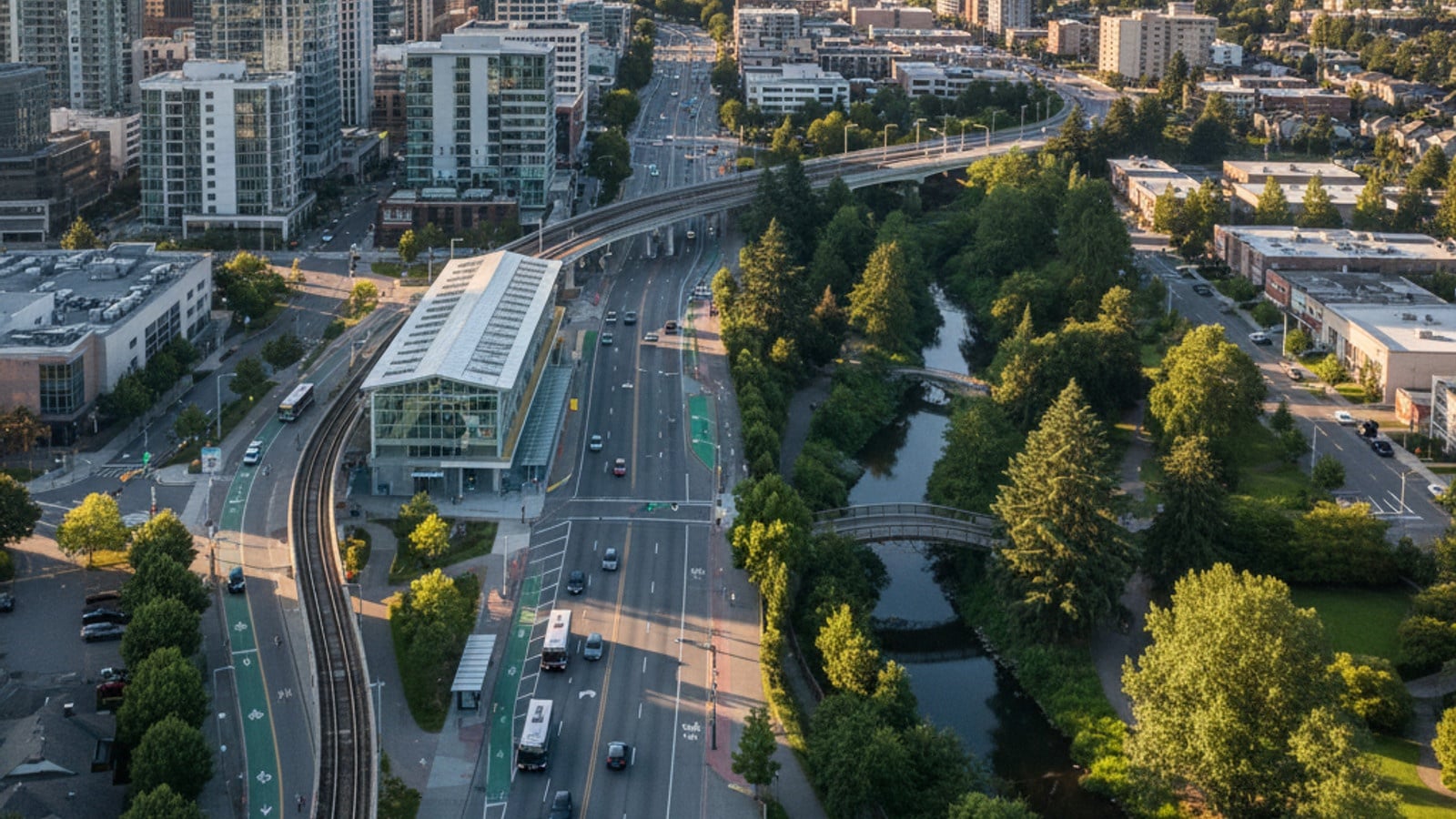
Evaluating transportation infrastructure is a critical step when buying a home on the Eastside. The reality of getting around Bellevue, WA has shifted significantly over the last few years, transforming from a car-dependent suburb into a deeply connected regional hub. Buyers today must understand how new transit corridors and established highway routes will impact their daily routines.
Whether you are commuting to tech campuses in Redmond or heading into downtown Seattle, the city offers a variety of ways to navigate the region. The recent completion of major rail connections has fundamentally changed the local transit map. Understanding the interplay between highways, bus routes, and active transportation pathways will help you choose a neighborhood that perfectly aligns with your lifestyle needs.
Navigating Bellevue's Major Highway Network
Bellevue is anchored by three primary highways that dictate regional vehicle travel. Interstate 405 serves as the main north-south artery, running directly through the center of the city and connecting the Eastside from Lynnwood down to Renton. Because this route bisects the city, buyers looking at homes near the commercial core should factor in the proximity to I-405 on-ramps for regional access.
For east-west travel across Lake Washington, residents rely heavily on Interstate 90 and State Route 520. These two floating bridges provide direct access into Seattle, but they operate under completely different financial models. The SR-520 bridge requires an active Good To Go! pass or a pay-by-mail toll, while the I-90 bridge remains a toll-free crossing.
Traffic congestion patterns follow predictable rush hour bottlenecks, particularly where I-405 intersects with the floating bridges. Drivers can leverage carpool lanes to bypass some of the heaviest gridlock during peak morning and evening travel windows. Understanding these choke points is essential when evaluating a property's true distance from major employment centers.
Average Commute Times to Seattle and Redmond
Standard commute times to Downtown Seattle via I-90 or SR-520 vary wildly depending on the time of day. Seattle sits roughly 10 miles west, which translates to a 15 to 20-minute drive in light traffic. During peak rush hour, that same trip often stretches to 45 minutes or more.
Traveling from Bellevue to Redmond, a major technology employment hub, generally takes 10 to 15 minutes outside of peak hours. Utilizing High Occupancy Vehicle lanes can significantly shorten these commute times for qualifying carpools. Buyers should test these routes during their expected travel windows to get an accurate feel for the daily drive.
Public Transit Options: Buses and Light Rail
The public transit landscape provides robust alternatives to driving. The Bellevue Transit Center acts as the central hub for regional transit, conveniently located right in the downtown core. This facility coordinates dozens of routes, making it a critical asset for residents who prefer to leave their cars at home.
King County Metro operates an extensive bus network that connects residential neighborhoods directly to major commercial centers. These routes offer reliable service throughout the Eastside, with frequent stops near major apartment buildings and suburban subdivisions alike. For buyers prioritizing transit access, locating a home near a primary bus line adds significant long-term value.
Sound Transit services integrate seamlessly with the local bus routes to provide broader regional access. This layered approach means commuters can easily transfer from a neighborhood bus to a regional express line. The combination of local and regional transit creates a highly functional network for daily commuters.
Riding the Sound Transit 2 Line
The historic opening of the Sound Transit Link light rail 2 Line connection across the I-90 floating bridge in March 2026 revolutionized Eastside transit. This expansion finally linked the Eastside directly to the broader Seattle rail network. Key Bellevue stations on the new line include South Bellevue, Bellevue Downtown, Wilburton, and the Spring District.
Travel time from Downtown Bellevue to the International District in Seattle is now a highly predictable 20 minutes. The light rail provides a permanent, traffic-free alternative for commuting to Seattle or Redmond.
Properties within walking distance of these new stations command a significant premium due to the unmatched convenience.
Active Transportation: Walkability and Biking
Non-motorized ways to navigate the city have seen massive infrastructure improvements in recent years. Downtown Bellevue boasts exceptional walkability, highlighted by a dedicated Pedestrian Corridor that connects major residential towers to retail centers. This interconnected pathway system allows residents to navigate the urban core without ever needing a vehicle.
Pedestrians enjoy easy access to local amenities like Bellevue Downtown Park and Bellevue Square on foot. The flat terrain in the commercial center makes walking a highly practical option for daily errands. Buyers looking for an urban lifestyle will find the downtown grid exceptionally accommodating.
Cyclists benefit from a growing network of dedicated bike lanes and multi-use trails throughout the city. The Eastrail trail network connects the Eastside through a continuous, paved corridor that is entirely separated from vehicle traffic. These active transportation routes offer an efficient way to travel between neighborhoods and commercial districts.
Local Shuttles, Rideshares, and Taxis
On-demand transportation services fill the gaps for quick trips around the city where walking or taking the bus might not be practical. The BellHop electric shuttle program is a standout local amenity, offering free rides within the downtown core. This service utilizes a fleet of 100% electric vehicles, operating within a designated six-mile zone to connect residents with shopping and dining.
Rideshare applications like Uber and Lyft remain highly active and widely available throughout the Eastside. Wait times are generally under five minutes in central neighborhoods, making them a reliable option for spontaneous travel. These services are particularly popular for evening outings or trips to regional transit hubs.
Traditional taxi services and car rental options are also readily available for visitors or residents who choose to live without a personal vehicle. Several rental agencies maintain offices in the downtown area for weekend excursions or longer road trips. Having these on-demand options nearby adds a layer of flexibility to the local transportation mix.
Parking Infrastructure and Regional Airports
Understanding the local parking landscape is crucial for residents who rely on personal vehicles. Bellevue offers a mix of parking solutions, including free parking at major retail centers like Bellevue Square. However, the downtown core predominantly relies on paid garages and metered street parking for office buildings and high-density residential towers.
Commuters utilizing public transit frequently rely on Park-and-Ride facilities scattered throughout the area. The South Bellevue Park-and-Ride serves as a major transit commuter lot, providing easy access to both express buses and the new light rail stations. Arriving early is often necessary, as these lots tend to reach capacity quickly during the morning rush.
For air travel, Seattle-Tacoma International Airport is located approximately 17 miles south of the city. Residents can reach the airport via I-405, regional express buses, or direct rideshare services. The proximity to a major international hub is a strong selling point for frequent travelers evaluating homes on the Eastside.
Frequently Asked Questions About Bellevue Transportation
Can I get around Bellevue without a car?
Yes, living without a car is entirely feasible if you reside in or near the downtown core. The combination of highly walkable pedestrian corridors, the free BellHop shuttle, and proximity to the Bellevue Transit Center provides ample mobility. Residents in these central zones rarely need a personal vehicle for daily errands.
Does the light rail go through Bellevue?
Yes, the Sound Transit 2 Line officially opened its full cross-lake connection in March 2026, running directly through the city. The route includes major stops at South Bellevue, Bellevue Downtown, Wilburton, and the Spring District. This provides a direct, 20-minute connection across Lake Washington into Seattle.
How much is an Uber ride from Bellevue to Seattle?
A standard rideshare trip from Bellevue to downtown Seattle typically costs between $30 and $50, depending on the time of day and surge pricing. Prices often peak during morning commute hours or immediately following major events. Travelers should also account for potential toll charges if the driver utilizes the SR-520 bridge route.
Check out this article next