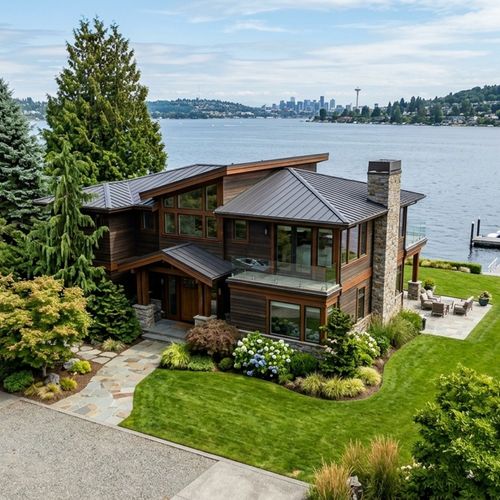

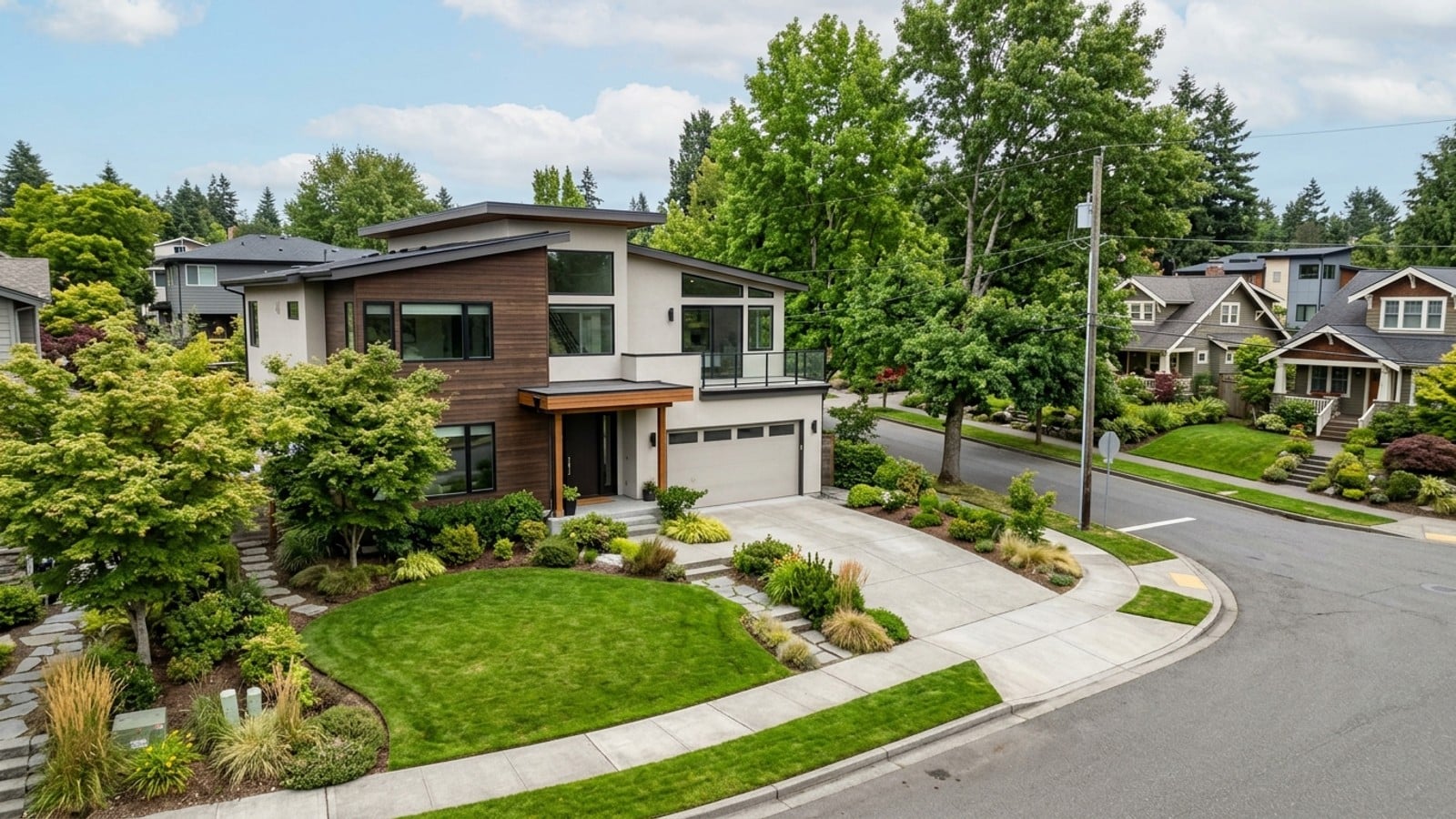
The median home price in Bellevue, WA sits around $1.4 million as of mid-2026, while properties in neighboring Redmond generally range between $1.05 million and $1.55 million. If you're shopping the Eastside of the Seattle metro and considering living in Bellevue, WA, you've probably already noticed how often these two King County cities come up in the same breath.
That makes sense. Both give you direct access to major tech employers and regional transit. But they're not interchangeable, and the difference between them isn't just a price gap. It's about what kind of daily life you're signing up for - how your commute works, what's walkable, and whether the housing stock actually matches what you need. The sections below break that down.
Housing Market and Home Prices
Bellevue homes have been selling in roughly 15 days on the market, with about 521 active listings available. Redmond moves at a similar pace, with strong demand concentrated in the 98052 zip code near the major tech campuses. Neither city gives buyers much room to dawdle.
Both operate well above the broader Washington state median, so the question isn't really whether it's expensive - it is - but which price point gets you the property type you're actually after.
Bellevue and Redmond Price Comparisons
The median sale price in Bellevue is approximately $1.4 million, with recent sales showing an average sale-to-list ratio of about 99%. That's a thin negotiating window. If you're not ready to move quickly and close to asking, you'll lose properties here. Bellevue's condo market does offer a lower entry point - units frequently priced around $680,000 - which matters if a high-rise is on your list.
Redmond's numbers depend on the data source and the specific neighborhood. The range typically lands between $1.05 million and $1.55 million, with Zillow's 2026 estimate for typical home value coming in around $1,364,000. Properties in the Overlake area tend to sit at the higher end of that range, given how close they are to the major employment centers.
Available Property Types
Bellevue's inventory spans high-rise condominiums in the downtown core to large single-family homes in the surrounding hills. Single-family homes here frequently exceed $1.2 million. The Spring District adds newer mixed-use development to the mix, so your options aren't limited to older construction.
Redmond offers townhomes, mid-rise condos, and single-family houses. The Overlake Urban Center is the densest part of the city - transit-oriented development built directly around the light rail expansion. If you're comparing attached housing in either city, make sure you're factoring HOA fees and lot sizes into your real cost calculation. Those numbers move the monthly payment more than most buyers expect.
Local Property Taxes and Ownership Costs
Bellevue's effective property tax rate averages about 0.82%. Redmond's median effective rate sits a touch lower at around 0.79%. Both fall below the overall King County average of 0.97%, which is worth knowing, though it shouldn't make you complacent about the actual bill.
When your home is worth over $1 million, even a "low" rate produces a significant annual number. A median-priced home in King County generates a tax bill of roughly $7,644, and homes in Bellevue and Redmond regularly exceed that baseline. Check the specific tax assessment on any property you tour - don't estimate from the rate alone.
Commute Routes and Public Transportation
The East Link light rail - Sound Transit's 2 Line - fully opened its Crosslake Connection to Seattle in March 2026. That's not a minor footnote: it established the world's first light rail line over a floating bridge and created a direct rail link between Bellevue, Redmond, and Seattle. For buyers who've been watching this project for years, it changes the math on where you're willing to live.
Highway access still shapes most people's daily routine, though. Eastside traffic is real, and the road network you're dealing with varies between the two cities.
Getting Around Bellevue
Bellevue connects to the broader region via Interstate 405, Interstate 90, and State Route 520. The Bellevue Transit Center handles King County Metro, RapidRide, and Sound Transit Express buses, so you're not dependent on any single route.
Light rail stations within the city include South Bellevue, East Main, Bellevue Downtown, Wilburton, Spring District, and BelRed. That's meaningful coverage across the city - enough that certain neighborhoods can legitimately skip the freeway altogether for Seattle trips.
Getting Around Redmond
Redmond drivers primarily use State Route 520 and State Route 202, connecting to Interstate 405 through Bellevue. The Overlake area is the city's main transit hub.
The 2 Line extends directly into Redmond, with service at the Redmond Technology Center Station and Downtown Redmond Station. If you're a Microsoft employee, that rail connection is worth pricing into your housing decision - a predictable, traffic-free commute has real value when SR 520 is backed up.
Shopping and Commercial Districts
Downtown Bellevue functions as the Eastside's primary commercial center. The Bellevue Downtown Station sits right next to major shopping centers, dining, and hotels. It's a genuine urban core - not a suburban strip disguised as one.
Redmond's commercial activity clusters around the Overlake area, where demand from the nearby Microsoft campus keeps the district busy. The feel is different from downtown Bellevue, more tied to the employment hub than to general retail draw.
Bellevue Retail and Dining
The East Main light rail station puts you within walking distance of Old Bellevue's restaurants and local boutiques. It's a distinct neighborhood from the larger downtown malls - more pedestrian-oriented, easier to use on a weeknight.
The Spring District is Bellevue's fastest-growing mixed-use neighborhood. New retail and dining options continue to open alongside residential buildings and office spaces, so the inventory there looks different than it did even two years ago.
Redmond Commercial Centers
Redmond's retail is woven into the Overlake district rather than anchored in a traditional downtown core. The commercial spaces serve both the daily workforce and a growing residential population along the light rail corridor.
If you're seriously considering Redmond, spend an afternoon around the Redmond Technology Center Station. The retail layout becomes much clearer in person than it does on a map.
Frequently Asked Questions
Is it more expensive to buy a home in Bellevue or Redmond, WA?
Bellevue is generally more expensive. The median sale price in Bellevue is around $1.4 million, while Redmond's median typically ranges between $1.05 million and $1.55 million. Condos in Bellevue offer a lower entry point at roughly $680,000.
How do property taxes in Bellevue compare to those in Redmond?
They're close. Bellevue carries a median effective tax rate of about 0.82%, and Redmond's rate is roughly 0.79%. Both fall below the King County average of 0.97%.
What is the daily commute like between residential Bellevue and the major tech campuses in Redmond?
You can drive it via Interstate 405 and State Route 520. You can also take the Sound Transit 2 Line light rail, which connects Bellevue stations directly to the Redmond Technology Center Station - a traffic-free option for reaching the Microsoft campus.
What are the biggest trade-offs buyers face when choosing to live in Bellevue over Redmond?
Bellevue gives you a larger downtown retail core and more high-rise condo options, but the median home price of $1.4 million reflects that. Redmond offers slightly lower median home prices and sits immediately adjacent to the Microsoft campus. Property tax rates and light rail access to Seattle are comparable in both cities.
How does the urban walkability of Downtown Bellevue compare to the neighborhood feel of Redmond?
Downtown Bellevue is dense and walkable - major hotels, shopping centers, and the boutiques of Old Bellevue are all within reach on foot. Redmond's densest commercial activity concentrates in the Overlake Urban Center near the Microsoft campus. Both areas connect directly to the 2 Line light rail stations.
Check out this article next