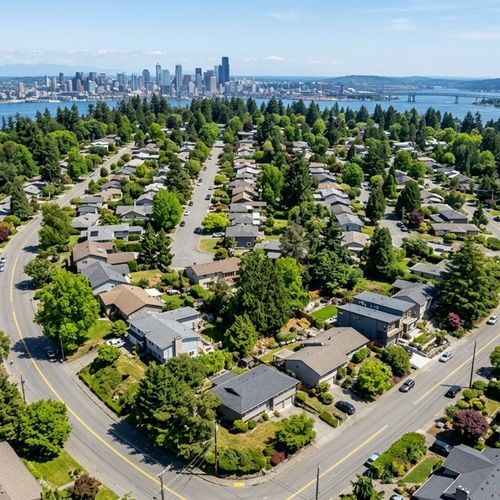

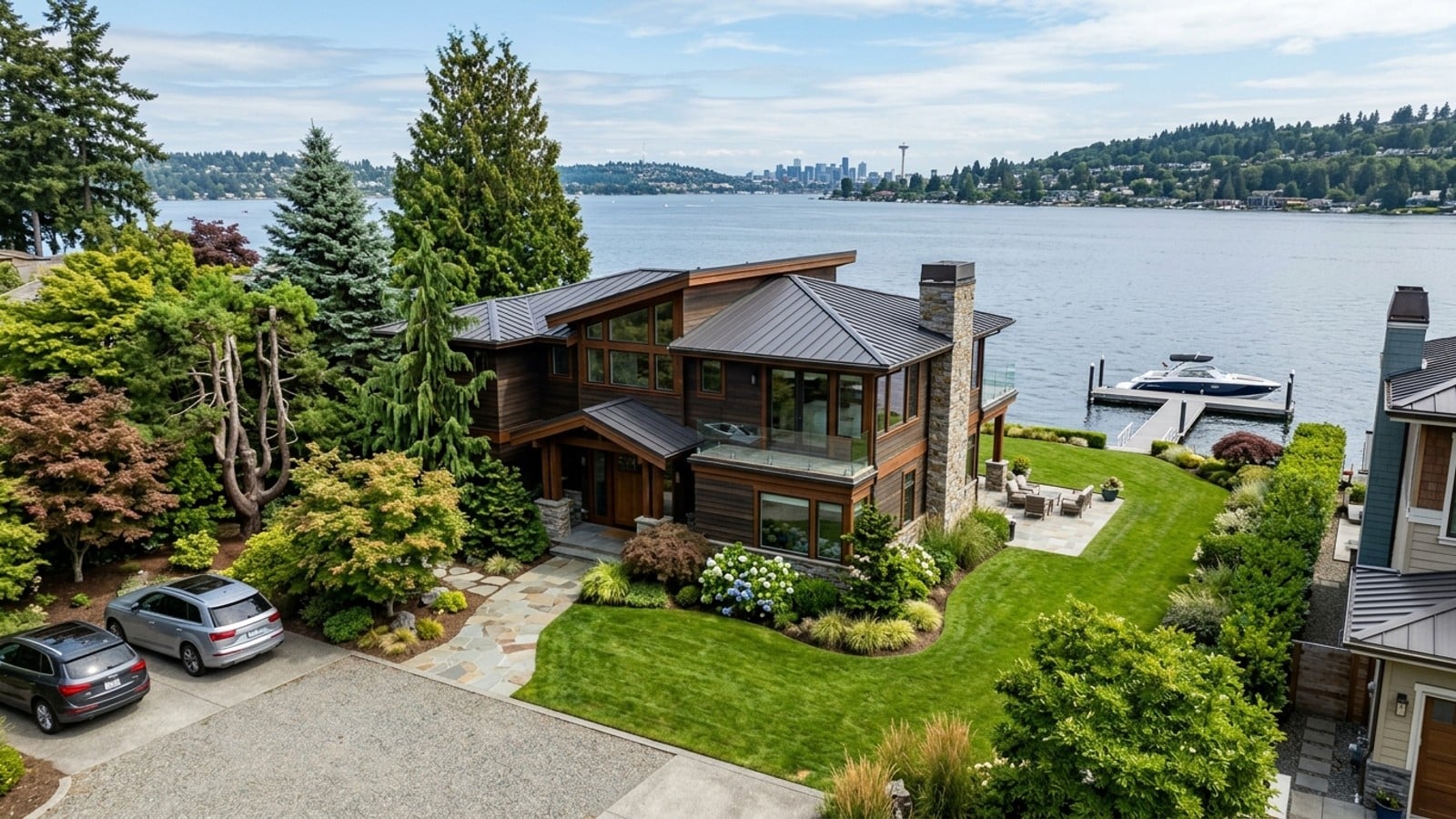
King County's Eastside has two real estate markets separated by a few miles of I-405, and buyers who think they're interchangeable usually end up surprised once they start touring. For anyone looking into living in Bellevue, WA or Kirkland, median prices in both cities clear $1 million comfortably - sometimes by a lot.
What they share is real: access to major tech employers, Lake Washington, and a reasonably direct shot into Seattle. What they don't share is character. Whether you're weighing a high-rise downtown condo against an established waterfront property, the choice is more specific than a zip code comparison tends to suggest.
Comparing Home Prices and Available Listings
Bellevue's median sale price sits around $1,400,000 as of mid-2026. The city is carrying about 4.2 months of inventory, with 125 homes sold in a single recent month. Sellers are doing well here - homes are closing at roughly 99.1% of list price, which tells you demand isn't going soft.
Kirkland runs in a similar price tier, though the monthly numbers shift. Depending on the month and the property types included, Kirkland's median sale price ranges from $1,279,000 to $1,499,000. The two cities occasionally swap the top spot entirely - a late 2025 report showed Kirkland's median residential price briefly climbing to $1,800,000 while Bellevue's sat at $1,750,000. That kind of flip happens when a run of waterfront sales hits the data.
Recent Sale Prices and Market Speed
In Bellevue, the median days on market before a home goes under contract is 15. The fastest-moving segment - single-family homes priced between $1.4 million and $1.85 million - often goes in under 10 days.
Kirkland runs a bit slower. Homes there typically sell in a median of 22 to 33 days from listing to closing. That's still not leisurely by any measure, and buyers in both cities should expect multiple offers on anything well-priced, especially in spring and summer.
Neighborhoods and Property Types
Bellevue's range is genuinely wide. You've got downtown high-rise condominiums, new mixed-use developments, and quiet established neighborhoods in the same city. The Spring District is Bellevue's newest urban neighborhood, positioned between Downtown Bellevue, Redmond, and Kirkland. Downtown condos average between $900,000 and $1.3 million; single-family homes in Clyde Hill and Enatai regularly exceed $3 million.
Kirkland's inventory skews toward waterfront properties and established single-family homes. The downtown Market area carries high-end properties and condos, with a median sale price that hit $3 million over a recent three-month period. Step outside the downtown core and you'll find more moderately priced single-family neighborhoods spread across the city.
Commute Times and Transit Options
Downtown Bellevue sits nine miles east of downtown Seattle. Both cities lean on Interstate 405, Interstate 90, and State Route 520 to connect residents to major employment centers - and Sound Transit is still expanding Eastside options, which changes the calculus for buyers who don't want to drive every day.
The routing differences between Bellevue and Kirkland matter more than people expect when they're budgeting their mornings.
Driving and Transit in Bellevue
Bellevue residents can pick their freeway depending on the destination. The Link Light Rail from East Main or the Spring District/120th station runs a consistent 20 to 25 minutes to downtown Seattle - that's "guaranteed" in a way that no freeway commute is. HOV lanes on SR-520 get you there in 20 to 30 minutes in light traffic. Peak hours stretch that to 35 to 55 minutes.
Driving and Transit in Kirkland
Kirkland commuters work primarily off SR-520. Off-peak from downtown Kirkland, you're looking at 30 to 35 minutes. During peak hours, that same drive runs 50 to 65 minutes.
Transit riders frequently use the South Kirkland Park and Ride to catch express buses - routes 255 and 255T. Parking is free, and the ride into downtown Seattle takes 30 to 40 minutes, which often beats driving by a meaningful margin.
Routes to Downtown Seattle
The I-405/SR-520 interchange introduces real variability for anyone heading into Seattle from Kirkland. A Kirkland resident using SR-520 during peak hours might spend 30 to 50 minutes just working through that junction.
Bellevue's secondary I-90 crossing is worth factoring in here. Access to both floating bridges means Bellevue residents have a backup when SR-520 stalls - Kirkland commuters don't have that same flexibility.
Parks, Retail, and Local Amenities
Both cities sit on Lake Washington, and both take public waterfront access seriously. Where they diverge is in how their amenities are organized - Bellevue built up, Kirkland built along the water.
Outdoor Recreation and Waterfront Access
Kirkland's waterfront is its calling card. The Kirkland Waterfront features interconnected parks and walking paths directly along Lake Washington, and that shoreline access runs through the center of the downtown Market area.
Bellevue Downtown Park is a significant green space sitting inside the city's urban core, and there are established neighborhood parks and trails spread through the residential areas. Different setup, different feel.
Shopping Centers and Downtown Districts
Bellevue Square anchors a large retail and dining district downtown. The surrounding blocks layer in high-end restaurants, tech offices, and luxury condominiums - it reads as a city center in the conventional sense.
Kirkland's commercial areas work differently. Street-level retail and dining sit close to the waterfront, and the transition from shops to residential neighborhoods is gradual enough that you can walk it without noticing where one ends and the other begins.
Deciding Between These Two Eastside Cities
Property taxes in King County land differently depending on the specific parcel and local levies - there's no single rate that covers either city cleanly. Bellevue's median effective property tax rate is 0.73%, below the Washington state median of 0.92%. Annual tax bills within Bellevue range from roughly $7,323 in the 98007 zip code to $11,506 in 98004.
The neighborhood-to-neighborhood comparison matters more than the city-to-city one. A waterfront condo in Kirkland is a genuinely different life than a new construction townhome in Bellevue's Spring District, even if the price tags are close. Touring properties in both cities is the only way to sort out which available homes actually match your budget and commute reality.
Frequently Asked Questions
Is it more expensive to buy a house in Bellevue, WA, or Kirkland?
It shifts by month and property type, but Bellevue generally trends slightly higher. Bellevue's median sale price sits around $1.4 million in 2026, while Kirkland's median ranges from $1.27 million to $1.49 million. That said, the two cities occasionally trade the top spot - Kirkland's residential median has sometimes surpassed Bellevue's.
How do property taxes compare for homeowners in Bellevue versus Kirkland?
Both cities fall under the King County property tax system, so rates vary by specific parcel based on local levies. Bellevue has a median effective property tax rate of 0.73%, with annual bills ranging from about $7,323 to $11,506 depending on the zip code. A verified citywide effective rate for Kirkland isn't available, since taxes depend on the exact location's school, fire, and EMS districts.
Which city offers a better commute to Seattle and local tech hubs, Bellevue or Kirkland?
Bellevue gives you more routing options - direct access to both I-90 and SR-520. Driving to Seattle from Bellevue takes 35 to 55 minutes during peak hours; the Link Light Rail runs a consistent 20 to 25 minutes. Kirkland commuters rely primarily on SR-520, with peak-hour drives running 50 to 65 minutes, though the South Kirkland Park and Ride express buses can bring that down to 30 to 40 minutes.
How do the public schools compare between Bellevue and Kirkland for families looking to buy?
Available data notes that Bellevue offers a well-regarded school system, but specific district-wide comparisons for Kirkland aren't included in current market reports. You'll want to pull the specific boundary maps and registration rules for the King County school districts covering each parcel you're considering. Property tax rates in both cities include local school district levies that fund these facilities.
What is the difference in neighborhood vibe and lifestyle between living in Bellevue and Kirkland?
Bellevue runs on a dense, high-rise urban core anchored by Bellevue Square and Downtown Park, with newer mixed-use development like the Spring District on the edges. Kirkland is lower-profile - a walkable downtown integrated directly with waterfront parks along Lake Washington, and a general lean toward established neighborhoods and waterfront properties rather than new construction.
Which real estate market historically offers better long-term resale value, Bellevue or Kirkland, WA?
Recent 2026 data shows both markets seeing slight year-over-year price adjustments rather than rapid appreciation. Bellevue's median sale price has seen recent decreases ranging from 0.15% to 11.3%; Kirkland's median dropped roughly 8.0% year-over-year in June. Sellers in Bellevue are still capturing strong returns - homes are closing at an average of 99.1% of list price.
Check out this article next