
If you're seriously shopping in the Puget Sound region and considering living in Bellevue, WA, you'll almost certainly land on this exact question: Bellevue or Seattle? The two cities sit on opposite sides of Lake Washington in King County, and while they're close in miles, they're pretty different in terms of housing stock, commute patterns, and what your dollar actually buys you.
Your budget and your daily routine are really what decide this. Seattle gives you denser urban neighborhoods and a lower entry price on single-family homes. Bellevue gives you larger lots and newer construction - at a real premium. Getting the current market data and the local tax picture sorted out before you start touring will save you a lot of wasted weekends.
Local Housing Markets and Home Values
Real estate on both sides of Lake Washington moves quickly, but the inventory and pricing dynamics are genuinely different. In Bellevue, you're looking at roughly 521 available homes and about 4.2 months of supply as of mid-2026 - tight enough that well-priced listings don't sit around.
Seattle carries a higher total volume of homes spread across dozens of distinct neighborhoods. Multiple offers on updated properties happen in both cities, though the pace of sales shifts depending on the specific zip code. The choice usually comes down to how much space you need and what you're willing to spend to get it.
Median Purchase Prices
The median sale price in Bellevue is approximately $1,400,000. Homes average roughly 15 days on market, and sellers are pulling about 99% of their list price.
Seattle offers a lower barrier to entry. The median home price there sits between $865,000 and $893,000. That gap matters a lot if you're capped near $1 million - you'll find significantly more options in Seattle proper than on the Eastside.
Available Property Types and Lot Sizes
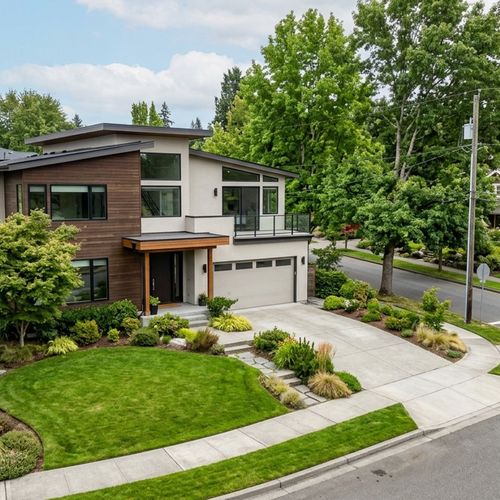
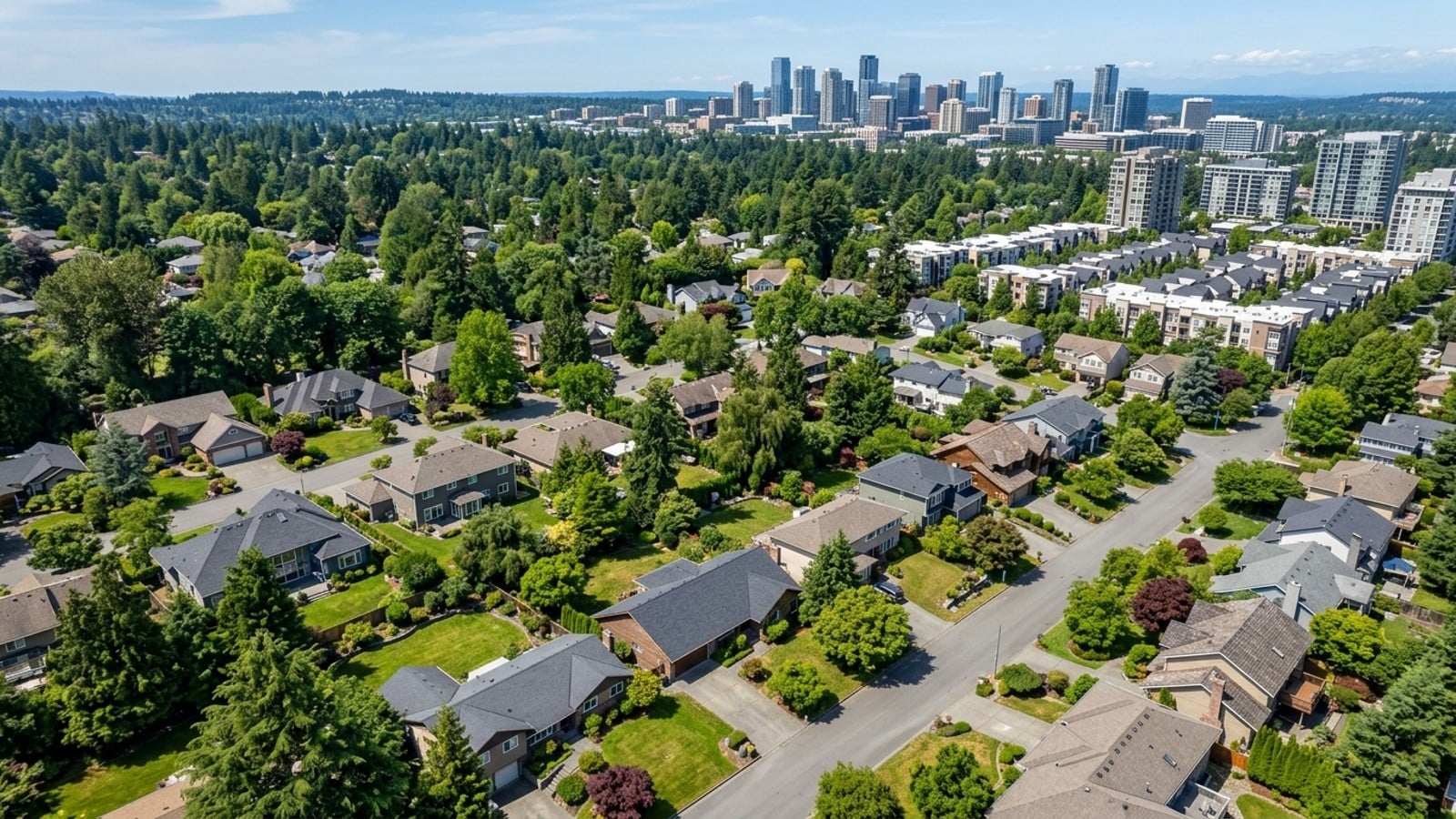
Bellevue runs the range from high-rise condominiums in its downtown core to spacious single-family homes in the surrounding areas. If newer construction, larger attached garages, and wider lots are on your list, the Eastside tends to deliver.
Seattle skews older and denser - Craftsman bungalows, Tudor revivals, a large inventory of townhomes and mid-rise condos. For buyers who want to be near commercial centers without maintaining a yard, that mix of property types is actually a feature, not a compromise.
Cost of Living and Local Taxes
The purchase price is only part of the monthly equation. Both cities sit within King County, but their municipal structures handle property taxes differently, and that difference compounds over time.
General living costs also vary depending on which data you look at. Some cost-of-living indices suggest a $60,000 salary maintains a comparable lifestyle in both cities. Others put Seattle between 16% and 22% cheaper than Bellevue overall. The primary driver is Bellevue's elevated housing market, though rental rates in Seattle's core neighborhoods can match or exceed Eastside rents - so it's not a clean sweep for either city.
Property Tax Rates in Both Cities
Seattle doesn't levy its own separate municipal property tax. Homeowners pay at the King County level, with a current levy rate of roughly $9.90 per $1,000 of assessed value. The county's effective property tax rate is about 0.82%, which works out to a median annual tax payment of around $7,292.
Bellevue has its own municipal rate. The most common property tax rate there is $7.10 per $1,000 of assessed value, with 88 cents of that going directly to the city. Bellevue's median effective rate of 0.73% is actually lower than the county average - but the higher property values push the median annual tax bill up to approximately $9,917. Lower rate, bigger check.
Everyday Living Expenses
Utilities, groceries, and transportation run at similar levels across both cities. The Seattle metropolitan area as a whole comes in higher than the national average for everyday expenses.
The real differences in daily spending usually trace back to specific neighborhood choices, not a hard city-to-city divide. Dining in downtown Bellevue or Capitol Hill costs more than eating at local spots in the broader residential zones of either city. That's true on both sides of the lake.
Transportation and Daily Commutes
Lake Washington isn't just a backdrop - it's a real logistical factor. If you're planning to live on one side and work on the other, you need to test your actual route during rush hour before you put in an offer. Don't take anyone's word for it.
The lake limits drivers to a handful of crossing points, and commute times shift based on the time of day, weather, and whatever infrastructure work King County happens to be running.
Driving Across I-90 and SR 520
The two main options are the I-90 floating bridge and the SR 520 toll bridge. The SR 520 route covers 10.2 miles from NE 8th Street in Bellevue to the University Street exit on I-5 in downtown Seattle.
HOV lanes on SR 520 typically run 20 to 30 minutes in light traffic. During peak hours, that stretches to 35 to 55 minutes. The Montlake merge on the Seattle side is a consistent chokepoint - build it into your morning math.
Public Transit and Light Rail Options
Sound Transit operates multiple bus routes connecting Eastside park-and-ride lots to downtown Seattle, which takes the driving variable out of the equation on good days and bad ones alike.
The Link light rail expansion adds another option worth knowing. The 2 Line is designed to cover the distance between Bellevue and Seattle in roughly 20 to 25 minutes - no traffic, predictable schedule. For commuters who work regular hours downtown, that consistency is hard to argue with.
Access to Recreation and Commercial Centers
Both cities give you solid access to the Pacific Northwest's natural environment - maintained parks, waterfront, trail systems that actually get used year-round.
The layout is where they diverge. Seattle weaves its commercial zones directly into dense residential neighborhoods. Bellevue runs a more centralized downtown core with distinct suburban retail centers fanning out around it. Neither model is better; they just produce different day-to-day rhythms.
Parks and Outdoor Recreation
Bellevue Downtown Park anchors the city's green space, and Meydenbauer Bay Park puts Lake Washington access - kayaking, swimming - within the city limits. The surrounding areas carry a lot of trail mileage for cyclists and runners.
Seattle's municipal park network is large, with waterfront spaces and forested trails woven through the urban fabric. Both cities maintain the kind of infrastructure that keeps outdoor use practical, not aspirational.
Dining and Commercial Districts
Downtown Bellevue is a legitimate retail destination - luxury shopping, high-end dining, the works. Crossroads offers something more localized: diverse food options and community events without the downtown price tag on a cup of coffee.
Seattle's commercial landscape is distributed across dozens of neighborhoods, each with its own retail corridor and character. Buyers who want to walk to dinner from their front door consistently gravitate toward Seattle's urban villages. It's a meaningful lifestyle difference, and it's worth being honest with yourself about which version of a Tuesday evening you actually want.
Frequently Asked Questions
How much more expensive is it to buy a house in Bellevue, WA compared to Seattle?
Noticeably more. The median home price in Bellevue is approximately $1,400,000, while Seattle's median runs between $865,000 and $893,000. Buyers pay a real premium for Eastside properties.
Are property tax rates significantly different between Bellevue and Seattle?
The rates cut one way; the bills cut the other. Bellevue's effective tax rate of 0.73% is lower than Seattle's King County rate of 0.82%. But Bellevue's higher home values push its median annual tax bill to around $9,917, compared to Seattle's $7,292. So lower rate, higher dollar amount.
How long is the daily commute if I buy a home in Bellevue but work in downtown Seattle?
Via SR 520, figure 20 to 30 minutes in light traffic, 35 to 55 minutes during peak hours. The Link light rail 2 Line offers a consistent 20 to 25-minute alternative if the bridge grind isn't your thing.
Is the Bellevue real estate market more competitive for buyers right now than Seattle?
Bellevue moves fast. Homes there average roughly 15 days on market, and sellers are receiving about 99% of their asking price. Come prepared.
What are the biggest lifestyle trade-offs buyers make when choosing Bellevue over Seattle?
It comes down to density and property type. Bellevue gives you larger lots, newer construction, and centralized commercial hubs like Crossroads. Seattle gives you denser urban neighborhoods, older historic homes, and hyper-local commercial districts where everything is a short walk away. Neither is the wrong answer - they just suit different lives.
Check out this article next