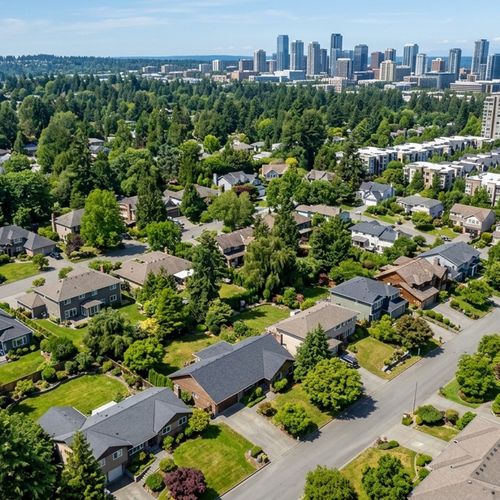

King County buyers on the Eastside eventually land on the same question: Bellevue or Sammamish? The comparison is unavoidable for those considering living in Bellevue, WA. The two cities sit roughly 10 miles apart, but they feel further removed than that - different housing stock, different commute math, different daily rhythms. Bellevue is a functioning commercial hub with direct highway access. Sammamish sits on a plateau east of Lake Sammamish, and its identity is almost entirely residential: subdivisions, larger lots, quieter arterials.
What it really comes down to is yard space versus transit access. Both markets are expensive - well above the broader county median in 2026 - so the budget question isn't which city is cheaper. It's which tradeoffs make sense for how you actually live. Getting clear on that early saves a lot of wasted showings.
Home Prices and Housing Inventory
King County real estate is not cheap, and these two cities sit at the expensive end even by local standards. You'll need a substantial budget in either market, but what that budget buys you looks quite different depending on which side of the lake you're on.
Bellevue mixes high-density housing with traditional neighborhoods. Sammamish is almost exclusively residential subdivisions. That distinction shapes everything from what's available to how quickly it moves.
Median Home Prices and Taxes
Bellevue's median sale price is approximately $1,400,000, with homes spending about 15 days on the market. The city currently has around 521 active listings, which works out to roughly 4.2 months of supply.
Sammamish runs higher. Median home values there land between $1.46 million and $1.6 million in 2026. Both cities fall under King County's effective property tax rate of roughly 0.8% to 1.04%, so the gap in tax bills mostly reflects the gap in home values - because Sammamish prices are generally higher, the actual dollar amount you'd pay annually tends to be higher there too.
Property Types and Lot Sizes
Bellevue's housing stock is genuinely mixed. Single-family homes are the most expensive segment, averaging around $1.23 million, but condos and townhomes make up a growing share of inventory. Condos average roughly $680,000 and cluster near Downtown Bellevue and Wilburton - which is part of why Bellevue's overall median looks lower than Sammamish's.
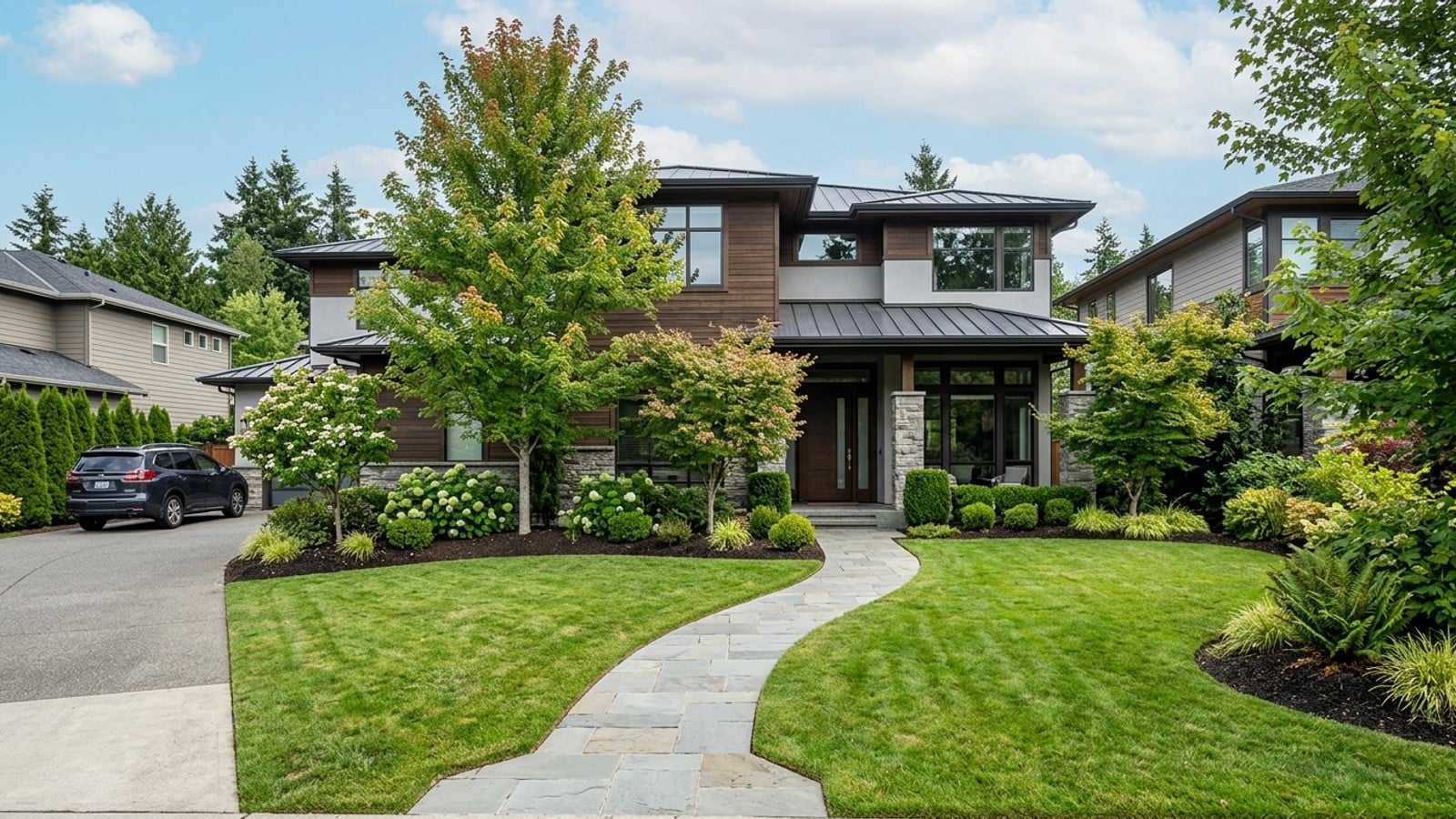
Sammamish is a different story. Single-family homes on larger lots dominate, and buyers looking for newer construction will find more options here than anywhere else on the Eastside. If square footage matters more to you than proximity to a commercial center, Sammamish is where to look.
Commutes and Transportation Logistics
This is where the two cities diverge most sharply in practical terms. Bellevue sits at the center of the Eastside and gives you fast access in multiple directions. Sammamish is about 20 miles east of Seattle and 10 miles east of Bellevue - and the plateau geography means fewer arterials out, which compounds during rush hour in ways that don't show up on a midday Google Maps search.
Do yourself a favor and test your actual route at 8 a.m. on a Tuesday before you go under contract.
Highway Access and Drive Times
From Bellevue, you're looking at 20 to 35 minutes to Redmond and the Microsoft campuses. Most Bellevue neighborhoods have immediate access to I-405 and I-90, so getting north toward Kirkland or west to Seattle doesn't require a lengthy surface-street haul before you hit the freeway.
From Sammamish, everything takes longer. The drive to Bellevue runs about 20 to 40 minutes via SR-900 and I-90 to I-405. Redmond is 20 to 35 minutes via SR-202 or NE 8th Street. Seattle is 35 to 55 minutes via westbound I-90. Those ranges are real - the difference between 20 minutes and 40 minutes is the difference between a fine morning and a frustrating one.
Public Transit Options
Bellevue has Sound Transit's East Link light rail anchoring its transit options, connecting the downtown core toward Seattle and Redmond. The bus network along the I-405 corridor is reasonably dense. It's not Manhattan, but you have real alternatives to driving.
Sammamish doesn't. The city lacks light rail access and the bus infrastructure that comes with being closer to the I-405 corridor. Most residents drive, and that's worth factoring in if you're a two-car household or if fuel and parking costs matter to your budget.
Parks, Recreation, and Local Amenities
Both cities take green space seriously, but they approach it differently. Bellevue is an urban center that happens to have parks woven into it. Sammamish is a residential community that builds parks into its neighborhoods from the ground up.
Buyers who want walkable retail, restaurants, and amenities a short drive away tend to gravitate toward Bellevue. Buyers who want a quieter, subdivision-oriented environment with community spaces built into the neighborhood plan tend to land in Sammamish.
Parks and Waterfront Access
Bellevue maintains over 2,700 acres of parks and open space. Waterfront access is a genuine selling point - Meydenbauer Bay Park offers public waterfront access, leased and free moorage, a beach, a pier, and a beach house following a 2019 expansion. Chism Beach Park, Enatai Beach Park, Clyde Beach Park, and Newcastle Beach Park round out the waterfront options. In the city center, the 21-acre Bellevue Downtown Park features a waterfall and reflecting pond.
Sammamish sits east of Lake Sammamish and integrates smaller parks directly into its newer residential developments. The emphasis is neighborhood-level green space rather than the kind of destination park infrastructure Bellevue has built around its waterfront.
Frequently Asked Questions
Is it more expensive to buy a house in Bellevue, WA or Sammamish?
Sammamish generally carries the higher overall median. Home values there range from $1.46 million to $1.6 million, compared to Bellevue's median sale price of around $1.4 million. That said, Bellevue's median is pulled down by a larger inventory of lower-priced condos - single-family homes in Bellevue can easily match or exceed what you'd pay in Sammamish.
How bad is the daily commute from Sammamish to downtown Bellevue or Seattle?
It adds meaningful time compared to commuting from Bellevue itself. Driving to Bellevue takes roughly 20 to 40 minutes via SR-900 and I-90. Seattle is 35 to 55 minutes via westbound I-90 during peak hours. The plateau location and limited arterials are the main culprits.
How do the public school districts compare between Bellevue and Sammamish for buyers relocating?
Sammamish homes fall within the Lake Washington School District. Bellevue is served by its own local district. For specifics, you'll want to verify boundary maps and registration requirements directly with each district based on the exact property address you're considering.
Where am I more likely to find larger lot sizes and newer home construction: Bellevue or Sammamish?
Sammamish, without much debate. The plateau geography has made room for expansive, newer residential developments. Bellevue's housing stock is older and more mixed, with smaller lots and a growing share of condos.
What are the main lifestyle and community differences between living in Bellevue versus Sammamish?
Bellevue has a dense downtown core, immediate highway access, and East Link light rail. It functions as an urban center. Sammamish is a primarily residential community built around master-planned subdivisions - limited transit, quieter streets, neighborhood-focused living rather than proximity to commercial hubs.
Are there property tax or local utility fee differences between Bellevue, WA and Sammamish?
Both cities are in King County, so the effective property tax rate is similar - roughly 0.8% to 1.04% for both. Because median home values in Sammamish tend to run higher, the actual dollar amount paid in property taxes is typically higher there as well.
Check out this article next